Equal in Dignity: Ending Discrimination Against Persons with Albinism
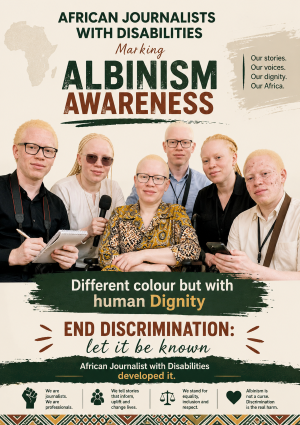
World Albinism Awareness Week is observed annually as a powerful global moment to deepen public understanding, confront harmful stereotypes, and reaffirm the rights, dignity, and humanity of persons with albinism. For African Journalists with Disabilities (AJWD), this week is particularly significant. It is an opportunity not only for reflection, but for intentional storytelling—reshaping narratives that influence perception, policy, and social inclusion across Africa.
Across media spaces, words matter. They can either reinforce stigma or dismantle it. AJWD stands firmly in the commitment to ensuring that persons with albinism are represented accurately, respectfully, and inclusively in public discourse.
Understanding Albinism
Albinism is a rare, non-contagious genetic condition present at birth. It results from the inheritance of specific genetic traits from both parents, leading to a reduction or complete absence of melanin—the natural pigment responsible for colouring the skin, hair, and eyes, and offering some protection against ultraviolet radiation.
It occurs across all racial and ethnic groups and affects males and females equally. Importantly, albinism is not a disease, a curse, or a supernatural condition. It is a natural variation of human genetics—part of the diversity that defines humanity itself.
Many persons with albinism also experience varying degrees of visual impairment due to the lack of pigmentation in the eyes. This makes access to inclusive education, assistive technologies, and specialized eye care not just beneficial, but essential for equal participation in society.
Health Risks and Systemic Barriers
The absence of sufficient melanin exposes persons with albinism to heightened risks, particularly from ultraviolet radiation. Without adequate protection, they are significantly more vulnerable to sunburn and skin cancer. They may also experience light sensitivity and chronic visual challenges.
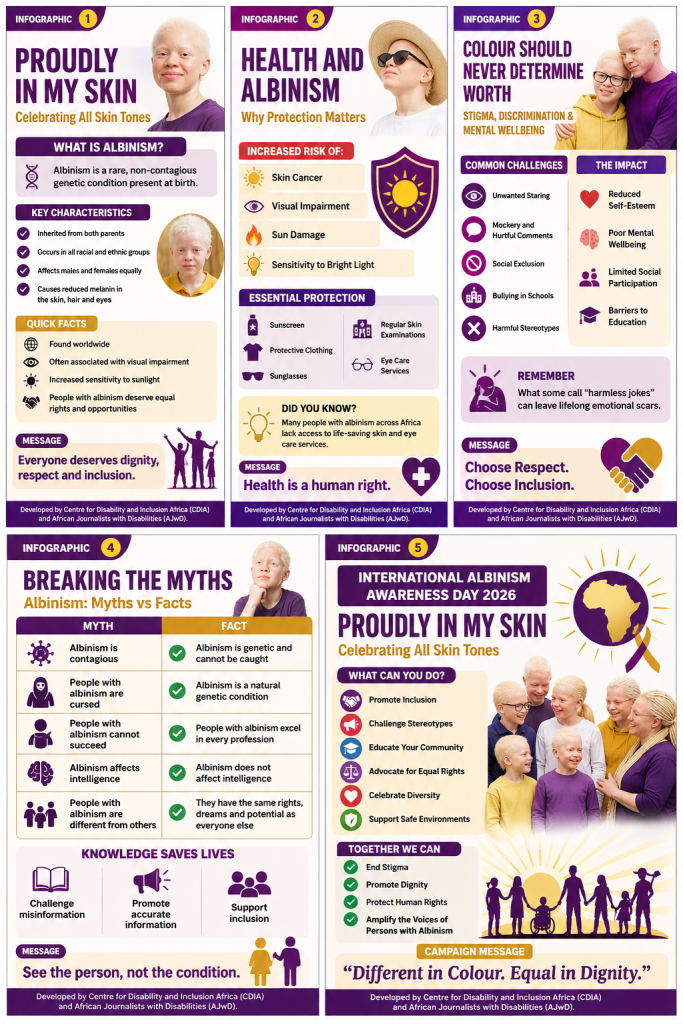
Yet, these risks are manageable when appropriate interventions are in place. Regular use of sunscreen, protective clothing, UV-blocking sunglasses, routine dermatological screening, and access to affordable eye care can greatly improve quality of life and longevity.
Unfortunately, in many parts of Africa, these basic supports remain inaccessible. Poverty, weak healthcare systems, and limited public awareness continue to place thousands of persons with albinism at preventable risk. Ensuring access to healthcare is therefore not an act of charity—it is a fundamental human right and a matter of justice.
Stigma, Discrimination, and Social Exclusion
Beyond medical concerns, persons with albinism frequently face entrenched stigma and discrimination. Deep-rooted myths and misinformation continue to fuel exclusion in schools, workplaces, and communities.
Children are often subjected to bullying and isolation, while adults encounter barriers to employment and social participation. These experiences have lasting psychological consequences, affecting self-esteem, mental health, and overall wellbeing.
Inclusion must therefore go beyond awareness campaigns. It requires deliberate action—policy enforcement, education reform, inclusive workplace practices, and sustained community engagement that promotes respect and empathy.
Replacing Myths with Facts
One of the most effective tools in combating discrimination is accurate information. Albinism is not contagious. It cannot be transmitted through contact. It is not a punishment, spiritual affliction, or omen.
Persons with albinism are individuals with equal intelligence, abilities, aspirations, and potential. Across Africa and globally, they are excelling as journalists, academics, entrepreneurs, artists, advocates, and leaders. Their contributions strengthen societies when given equal opportunity.
When misinformation is replaced with truth, societies become safer, more inclusive, and more equitable.
A Call to Collective Action
As we observe World Albinism Awareness Week, AJWD calls on governments, media professionals, educators, healthcare providers, employers, and civil society actors to intensify efforts toward inclusion and protection.
Every stakeholder has a role to play: challenging stereotypes, promoting accurate representation in the media, improving access to healthcare, and creating environments where diversity is not merely tolerated, but celebrated.
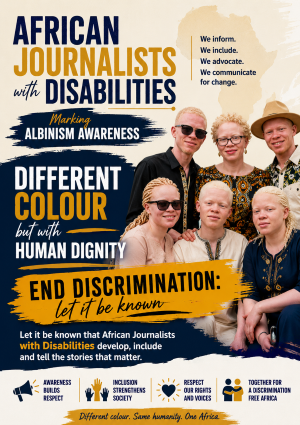
At African Journalists with Disabilities (AJWD), we remain committed to advancing inclusive journalism that elevates marginalized voices and strengthens public understanding of disability across Africa.
This week and always, we are reminded of a simple truth that must guide our collective action: different in colour, equal in dignity.