Driving Inclusive Health in Africa: Insights from AJwD’s July 2026 Webinar
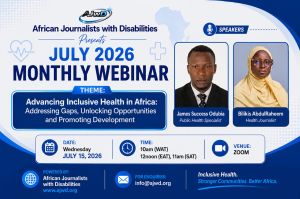
How can Africa build healthcare systems that truly leave no one behind? This question took centre stage during the African Journalists with Disabilities (AJwD) July 2026 Monthly Webinar, where journalists, disability advocates, public health experts, and media professionals from across the continent examined practical solutions for advancing inclusive health.
Held on July 15, 2026, the webinar, themed “Advancing Inclusive Health in Africa: Addressing Gaps and Unlocking Opportunities,” highlighted the vital role of journalists in promoting accountability, influencing policy, and amplifying the voices of persons with disabilities.
Why Inclusive Health Matters
Opening the webinar, AJwD Africa Lead, Yinka Olaito, stressed that inclusive health is essential for achieving sustainable development across Africa. Ensuring equal access to quality healthcare, regardless of disability, age, gender, or location, helps reduce health inequalities, strengthens communities, and supports economic growth.
Moderator Busola Oladotun also underscored the media’s responsibility to elevate disability issues and hold governments accountable for delivering inclusive healthcare services.
Technology and Policy Can Drive Change
Public health lecturer and researcher James Success Odubia delivered the keynote presentation on unlocking opportunities for disability-inclusive healthcare, using the Liberia Disability Act as a practical case study.
He identified three priority areas for improving healthcare access for persons with disabilities:
- Expanding accessible digital health technologies.
- Strengthening community-based healthcare systems.
- Implementing and enforcing disability-inclusive policies.
Odubia called for greater investment in accessible health facilities, affordable assistive technologies, and continuous training for healthcare professionals. Most importantly, he emphasized that persons with disabilities must be actively involved in designing and implementing policies that affect their lives.
The Media’s Role in Disability Inclusion
Award-winning journalist Bilkis Abdurraham Lawal challenged journalists to move beyond sympathy-based reporting and embrace more inclusive storytelling.
She encouraged media professionals to treat persons with disabilities as credible sources, experts, and leaders rather than limiting their representation to stories of hardship. She also called on media organisations to create inclusive newsrooms by employing journalists with disabilities and improving accessibility through sign language interpretation and accessible digital platforms.
Lawan further emphasized the importance of using respectful, disability-inclusive language and strengthening journalists’ capacity to report accurately on disability rights and health issues.
Shared Challenges Across Africa
Participants from Liberia, Tanzania, Kenya, Zambia, and other AJwD chapters shared common barriers affecting persons with disabilities in accessing healthcare.
Among the challenges discussed were:
- Inaccessible healthcare facilities.
- Limited assistive technologies.
- Discrimination from healthcare providers.
- Poor accessibility of digital health services.
Despite these challenges, participants agreed that journalists with disabilities have a unique role in exposing systemic barriers, influencing public discourse, and advocating for policy reforms.
A recurring message throughout the webinar was the disability rights principle: “Nothing About Us Without Us.” Inclusive health policies are most effective when persons with disabilities are meaningfully involved in decision-making.
Turning Conversations into Action
The webinar concluded with commitments to sustain advocacy beyond the virtual discussion. AJwD announced plans to support the Liberia Chapter Webinar on July 22, 2026, explore documentary storytelling training with the Disability Justice Project, strengthen emerging country chapters, and share the webinar’s recommendations with policymakers and stakeholders.
Members were also encouraged to organise country-level conversations, contribute to the African Inclusive News magazine, and continue advocating for disability-inclusive newsrooms across Africa.
Building a More Inclusive Africa
The July webinar reaffirmed that advancing inclusive health requires collaboration between governments, healthcare providers, civil society, and the media.
For African journalists, the task goes beyond reporting the news—it is about shaping conversations, demanding accountability, and ensuring that persons with disabilities are visible, heard, and included in decisions that affect their health and well-being.
At AJwD, these conversations will continue to drive action toward a future where inclusive healthcare is not an aspiration but a reality for every African.
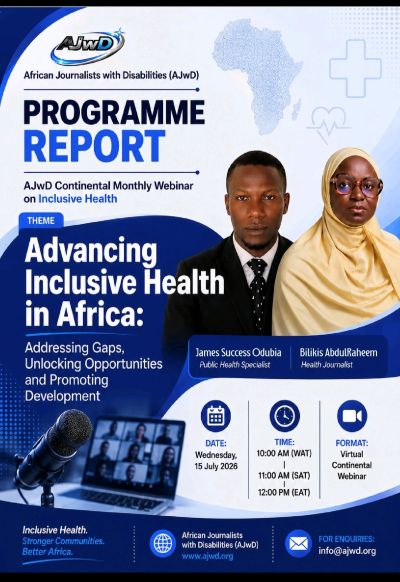
You can read full programm report here or click /copy and paste this link https://www.linkedin.com/feed/update/urn:li:activity:7483154186042318849/